informational · 2026
IPTV vs Cable TV vs Satellite — Full Comparison 2026
Honest 2026 comparison of IPTV, cable, and satellite TV. Channels, picture quality, latency, cost, contract length, and which one wins for your use case.
Strong 8K IPTV Editorial
Written + reviewed by our IPTV operations team
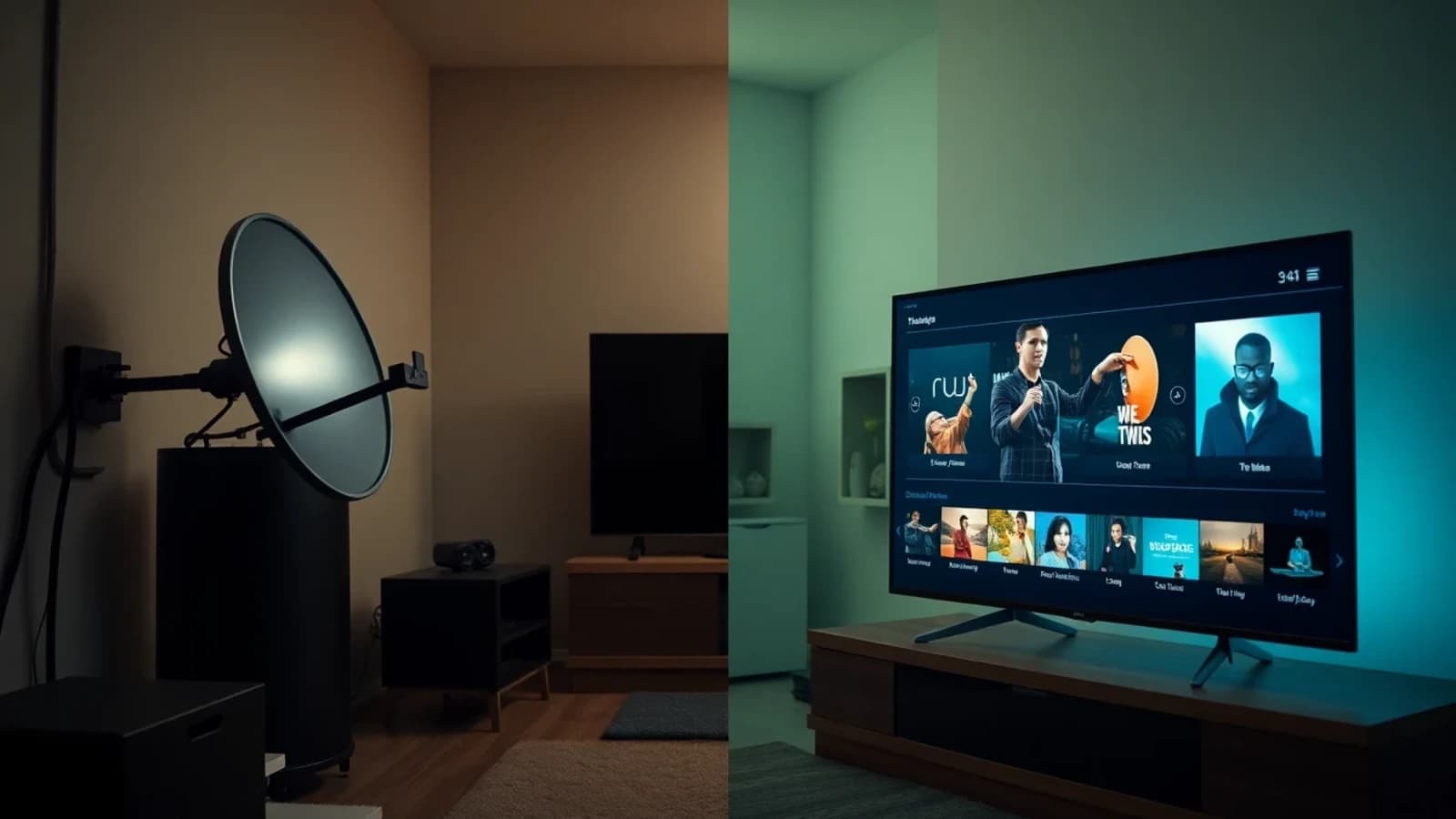
If you're comparing IPTV against cable or satellite in 2026, you're already most of the way to cancelling cable. The numbers don't favour cable any more — and satellite is in even worse shape. But each delivery method has genuine trade-offs that the marketing brochures don't mention. Here's the honest comparison.
What is each, technically?
Cable TV
Coax cable from the street to your house carries TV signals on dedicated frequencies. Same physical wire as your cable internet, different frequency band. Operators: Comcast/Xfinity (US), Spectrum, Cox, Virgin Media (UK), Vodafone Cable (DE), Free Cable (FR), etc.
Satellite TV
Geostationary satellite (typically 36,000 km up) beams a signal to a dish on your roof; a set-top box decodes it. Operators: DirecTV, Dish (US), Sky (UK/IE/IT/DE), Bell Satellite (CA), Canal+ Sat (FR).
IPTV
TV streams delivered as IP packets over your normal internet connection. No special infrastructure on your end — your router and Wi-Fi are it. Operators range from giant telcos (BT TV, Orange TV, T-Mobile TV) to OTT specialists (YouTube TV, Sling, Hulu+ Live) to independent providers like IptvStrong8k.
The comparison table — what actually matters in 2026
| Feature | IPTV | Cable | Satellite |
|---|---|---|---|
| Monthly cost (typical) | €5–€15 | €60–€120 | €50–€100 |
| Channels included | 32,000+ | 200–600 | 200–500 |
| VOD library | 100,000+ | Add-on, paid | Limited |
| 4K UHD | Yes | Some channels | Some channels |
| Contract length | None | 12–24 months | 12–24 months |
| Hardware required | Any device | Cable box (rented) | Dish + receiver |
| Setup time | 5 minutes | ~1 week (technician) | ~2 weeks (install) |
| Cancel anytime | Yes | Early-termination fee | Early-termination fee |
| Weather-affected | No | No | Yes (rain/snow) |
| Watch from anywhere | Yes | Limited | No |
| Latency on live sport | ~5–15s behind broadcast | ~3–5s | ~2–3s |
Where each one wins
Cable still wins for…
- Old people who don't want anything new. No exaggeration — familiarity is a real product feature, especially for users in their 70s+.
- Bundles with home internet.Sometimes the “internet + TV together” price is genuinely competitive.
- Lowest latency on live sport.Cable is ~5–10 seconds ahead of IPTV. If you care about not seeing the goal in your friend's text 10 seconds before your screen, this matters.
Satellite still wins for…
- Rural locations without good internet.If your DSL maxes out at 5 Mbps, IPTV won't work for you. Satellite delivers regardless.
- RV / boat / off-grid use. Satellite works anywhere with sky; IPTV needs internet you trust.
IPTV wins for…
- Anyone with reliable home internet. Which in 2026 is most of Europe, North America, and the Middle East.
- Cost. One-tenth the price for ten times the channels. Not even close.
- Flexibility. Watch on your phone in bed, your laptop on a plane, your TV at home, your tablet in the kitchen — same login.
- VOD library. 100,000+ movies and series are baked in. Cable and satellite charge €15–25/month extra for a library a tenth that size.
- 4K UHD. IPTV ships every premium channel in 4K where the source allows. Cable and satellite limit 4K to a handful of pay-per-view events.
- No contract. Try a month, cancel if you hate it. No early- termination fee.
Try it tonight
Convinced? Try IptvStrong8k for 24h free
Same servers as paid plans, no card. Or grab a 1-month plan for €9.99 and decide after one weekend of football.
The honest downsides of IPTV
We're not going to pretend IPTV is perfect — it's not. The real trade-offs:
Live sport is 5–15 seconds behind
IPTV streams via internet protocols introduce a delay that cable and satellite don't have. Annoying if you're watching a tense match while your friends watch on Sky and text you the result. Mitigation: turn off social media notifications during games.
Reliability depends on your internet
If your internet drops, your TV drops. Cable and satellite have separate infrastructure and keep working when your Wi-Fi dies. Mitigation: get a router with 4G/5G failover (~€100), which keeps you watching during ISP outages.
The provider has to be reliable
With cable, you have one provider per region — they have to deliver because the regulator watches. With IPTV, the market is fragmented and a lot of providers are cowboys. Pick a serious one (we'd say IptvStrong8k, but check our country guides for honest comparison). Free trials are how you derisk this.
Legal grey area depending on country
Receiving IPTV is legal for personal use in most countries; the legal risk usually sits with operators rather than viewers. But the picture varies — UK and Italy in particular have been aggressive about ISP-level blocks of unlicensed providers. We always recommend confirming the latest local law and ensuring you're consuming licensed content.
The verdict
For 90% of households in 2026 with a stable broadband connection, IPTV is the obvious choice — same content, fraction of the price, no contract. Cable and satellite still have niche use cases, but they're shrinking every year. If you're reading this and you're still on cable, the math says try IPTV with a free trial and see for yourself.
For practical next steps: see our pricing, install the Firestick app in 5 minutes, and troubleshoot any buffering with our 10-fix guide.
Frequently asked questions
Looking for more? See all posts · RSS feed · published in 2026